Marie-Claire Dwek discusses authentic leadership
Marie-Claire Dwek, CEO of Newmark Security, shares what authentic leadership looks like and what it really takes to lead as your true self.

Marie-Claire Dwek, CEO of Newmark Security, shares what authentic leadership looks like and what it really takes to lead as your true self.
Steve Cockram, co-founder of Giant Worldwide, talks about his latest book, 'The Voice-Driven Leader' and explains how to create environments in which every voice gets heard.
From personal crises to the boardroom, discover how to build resilience in leadership, show up as your authentic self and leverage kindness and discipline for sustained influence.
A male leader with a stay-at-home wife is seen as normal. But if the situation is reversed, it's still seen as unusual. This outdated imbalance needs to be called out.
More than two-thirds of respondents to a new UK survey say that gender bias is a barrier to progressing into leadership positions.
Marie-Claire Dwek, CEO of Newmark Security, shares what authentic leadership looks like and what it really takes to lead as your true self.
Vish Alluri, co-author of ‘The Enlightened Manager', discusses a thoughtful approach to management which draws on the teachings of the philosopher, Jiddu Krishnamurti.
Steve Cockram, co-founder of Giant Worldwide, talks about his latest book, 'The Voice-Driven Leader' and explains how to create environments in which every voice gets heard.
Keynote speaker and transformational coach, Ravi Rajani, talks about his new book, 'Relationship currency: five communication habits for limitless influence and business success'.
While cultural intelligence (CQ) needs to inform big picture strategic and operational issues, where it really comes to life is in the everyday practices of a leader.
Words have their own energy and meaning and need to be chosen with care. That's why language is such an important barometer of organisational culture.
Pondering issues before acting brings new alternatives, fresh perspectives and creative solutions. That why leaders who don't pause to reflect often run into trouble.
'Global leadership' is one of those fancy terms that gets used in glossy consulting reports and EMBA marketing briefs. But what does it actually mean?
All change brings new opportunities. The tree that looks almost dead in the winter bursts with blossom in spring. The frozen wasteland delivers a bountiful harvest in the autumn. As business leaders, we can learn a lot from nature.
Many so-called leaders have an unhealthy interest in the outward trappings of their position. But real leadership is inconspicuous - and it's about far more than status or measurable achievements.
Even faced by a global pandemic, we don't seem able to bridge our tribal divides and leverage our differences to find solutions, rather than using them to further destroy us.
Academics have been arguing for years about what makes a leader trustworthy, but it can really be boiled down to three clear attributes: ability, integrity and benevolence.
Command-and-control management assumes that social systems work like machines. But they don’t. So in today’s networked world, leadership is less about playing chess and more about becoming a gardener.
We humans are often very poor at self-awareness. But anyone who sees themselves as a leader can’t afford to be complacent, and emerging leaders in particular need honest feedback.
During this crisis, it is people who will be the ultimate differentiator. And leading means meeting people where they are, because that's the only way to convert self-interest to shared interest.
Suddenly finding yourself sitting at home leading a virtual team is a tough call, particularly with everything else that's going on in the world. So here are seven key behaviors that will make the task of virtual working much easier.
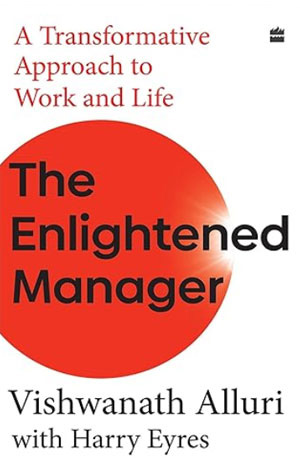
Can we truly manage others without first understanding ourselves? This is the question at the heart of a book that takes an unconventional approach to management by drawing on the teachings of the teacher and philosopher, Jiddu Krishnamurti.
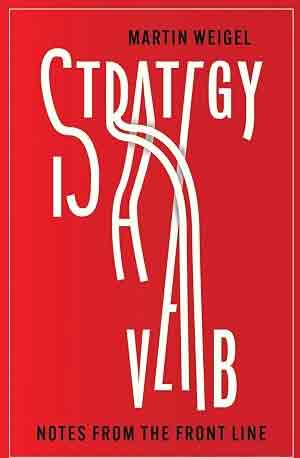
In this exploration of modern brand strategy, creativity, leadership and business thinking, Martin Weigel argues that strategy is not a process or a template, but a discipline of action, judgement, imagination, and consequence.
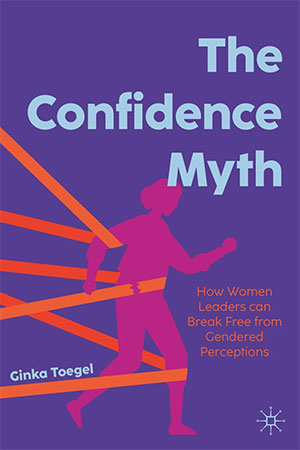
How can women leaders break free from gendered perceptions? Professor Ginka Toegel’s new book challenges the narrative that female leaders lack confidence or that women need to "fix" themselves, arguing for a fundamental shift in how organisations recognise and reward competence.